
 TopGK
TopGK Shop All



![The Legend of Zelda Link 1/6 Scale TOPGK Statue[R18] In Stock-MintBoy Studio - Photo 13 | TopGKStore](https://topgkstore.com/wp-content/uploads/2026/03/The-Legend-of-Zelda-Link-16-Scale-TOPGK-StatueR18-In-Stock-MintBoy-Studio-9-100x100.webp)
 By Source Type



Buying Guide, Culture & Market Analysis, Culture and Stories
Masato Ohata KOTODAMA Statue: The Soul of Language Transformed Into Contemporary Art
Sep
What if words could take physical form?
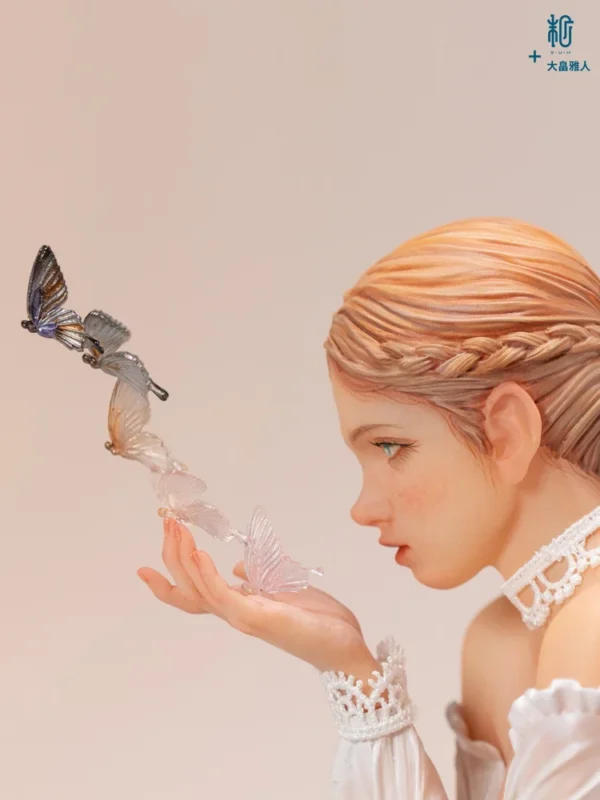
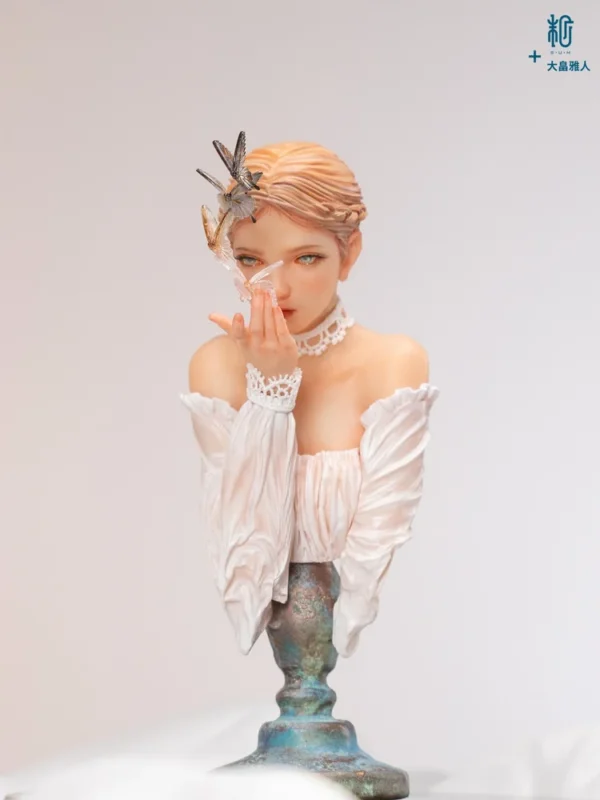
The Masato Ohata KOTODAMA Statue explores exactly that question. Created by artist Masato Ohata in collaboration with Manas, KOTODAMA transforms an ancient Japanese idea about the power of language into a contemporary licensed art collectible. Rather than focusing on a fictional character or conventional decorative subject, the artwork explores something far more universal: the emotional power carried by words and names.
In Japanese culture, kotodama refers to the belief that mystical power resides within words and names. In other words, language is not simply a method of communication. It can carry influence, emotion, encouragement, pain, redemption, and even lasting consequences.
For Masato Ohata, this idea became the foundation for KOTODAMA. He approaches words as something that can live, move, and spread from one person to another. Consequently, a single expression can affect different people in completely different ways. One person’s words might provide comfort, while another person’s words might cause harm.
That concept gives the Masato Ohata KOTODAMA Statue a distinctive position within the world of collectible art. It is not simply an object designed to fill a display shelf. Instead, it encourages viewers to think about communication, emotion, and the influence that language has on everyday life.
Part 1: What Makes the Masato Ohata KOTODAMA Statue Different?
Many collectible statues begin with recognizable characters, dramatic scenes, or established fictional worlds. KOTODAMA takes another direction.
The Masato Ohata KOTODAMA Statue is built around an idea.
At the center of the work is the Japanese concept of kotodama, commonly associated with the spiritual or mystical power contained within language. This concept provides the artwork with a foundation that extends beyond visual decoration. Moreover, it creates a connection between traditional cultural thought and contemporary artistic expression.
The result is an art collectible that asks viewers to consider a familiar part of human life from another perspective.
Everyone uses words. Everyone hears words. Everyone remembers certain words.
Some words encourage us when we need support. Others remain with us because they caused pain. Likewise, a simple sentence can change the direction of a conversation, a relationship, or even a person’s understanding of themselves.
KOTODAMA takes this everyday experience and turns it into an artistic theme.
From Language to Physical Art
The idea behind the KOTODAMA Art Statue is especially interesting because language itself has no physical shape. Words can be spoken, written, remembered, or shared, but they cannot normally be held in the hands.
Masato Ohata’s work approaches this contradiction through art.
Instead of presenting language as something purely abstract, KOTODAMA gives the concept a physical presence. Therefore, the artwork becomes a bridge between an invisible idea and a tangible collectible.
This is one reason the piece can appeal to contemporary art collectors who want more than visual complexity.
A meaningful artwork does not always need to tell a complicated story. Sometimes, its strength comes from a simple question that continues to develop in the viewer’s mind.
KOTODAMA does precisely that.
It encourages collectors to think about what words mean, how they travel, and why some expressions remain powerful long after they have been spoken.
Masato Ohata’s Philosophy Behind the Work
Masato Ohata’s approach to KOTODAMA adds another important dimension.
According to the provided concept, Ohata believes that words have a life of their own and can fly outward to spread. Consequently, words do not necessarily end when someone finishes speaking. They can move between people and continue influencing others.
This perspective gives the Masato Ohata KOTODAMA artwork an almost living quality at the conceptual level.
A word can begin with one person, reach another, and then become part of someone else’s emotional experience. Furthermore, that second person may pass the influence onward.
The process can continue indefinitely.
That idea makes KOTODAMA especially relevant in a world where communication happens faster and across greater distances than ever before. Whether through conversation, writing, messages, or other forms of expression, words constantly move between people.
The artwork therefore connects an old cultural belief with an experience that remains highly relevant today.
Part 2: The Message Behind KOTODAMA
The artistic meaning of KOTODAMA becomes even more compelling when considering Masato Ohata’s message about how people communicate.
The artist hopes for a world with fewer hurtful words. At the same time, he wishes for more warm words capable of helping and saving others.
That message gives the KOTODAMA Statue an emotional foundation.
Rather than treating language as something neutral, the work recognizes that communication carries responsibility. Words can build people up, but they can also leave emotional damage. Therefore, choosing how we communicate becomes an important part of how we affect the people around us.
Words Can Carry Redemption
One of the strongest ideas associated with KOTODAMA is that words can bring redemption.
A warm expression can arrive at exactly the right moment. A few sincere words can give someone confidence, comfort, or the feeling that they are not alone. Consequently, language can become a form of support.
This is what makes the KOTODAMA Art Statue more than a purely conceptual object.
Its theme has an emotional connection to ordinary human experiences. Collectors do not need specialized knowledge of contemporary art to understand the basic message. Everyone has experienced the impact of words in some form.
That accessibility can make KOTODAMA especially meaningful within a personal collection.
Words Can Also Cause Harm
However, KOTODAMA does not present language as purely positive.
Words can also hurt.
An expression spoken without consideration can remain in someone’s memory for years. Moreover, because words can spread, the original impact does not always stop with the person who first hears them.
This contrast between healing and harm is central to the concept.
The same human ability that allows people to encourage one another can also create emotional damage. Therefore, the power of language depends not only on what is said, but also on how, when, and why it is expressed.
KOTODAMA invites viewers to reflect on that responsibility.
Why This Message Works as Contemporary Art
Contemporary art often explores ideas that are difficult to represent through traditional imagery. Language is one such subject.
There is no single physical shape that represents every word, every emotion, or every human conversation. As a result, artists must find ways to transform an abstract concept into something that viewers can experience visually.
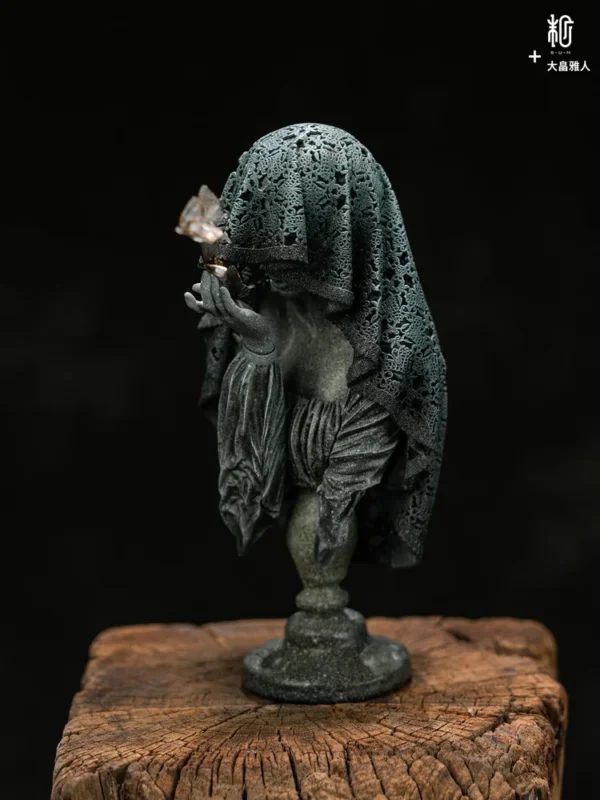
The Masato Ohata KOTODAMA Statue takes this conceptual approach.
Instead of relying on an established character narrative, it gives the viewer room to interpret the work through its central idea. Consequently, different collectors may connect with the piece for different reasons.
One person might focus on Japanese cultural philosophy.
Another might connect with the idea of emotional communication.
Someone else might simply appreciate the work as a contemporary art object with a strong narrative foundation.
That flexibility is part of its appeal.
Part 3: Why the Limited 88-Piece Editions Matter to Collectors
Beyond its concept, the Masato Ohata KOTODAMA Statue also has a significant collectible advantage: scarcity.
KOTODAMA is offered in two editions:
- S+U+M Edition — 88 pieces
- Artist Edition — 88 pieces
Each edition is limited to only 88 pieces.
For contemporary art collectors, edition size can play an important role in determining how an artwork fits into a collection. A limited production run creates a stronger sense of exclusivity than an unlimited decorative product.
Furthermore, the fact that both editions have only 88 pieces gives KOTODAMA a clear collectible identity.
KOTODAMA S+U+M Edition
The KOTODAMA S+U+M Edition is limited to 88 pieces.
For collectors interested in contemporary art and limited-edition works, this relatively small production quantity makes the edition particularly noteworthy. Rather than being designed for mass distribution, it belongs to a more selective collectible category.
Consequently, collectors who appreciate the concept behind KOTODAMA may see the S+U+M Edition as an opportunity to own a limited physical representation of the artwork’s message.
KOTODAMA Artist Edition
The KOTODAMA Artist Edition is also limited to 88 pieces.
Its connection to the artist-centered identity of the work can make it especially attractive to collectors who follow contemporary artists and prefer pieces with a stronger artistic narrative.
However, collectors should distinguish the two editions according to the specific version they prefer rather than assuming that one is automatically superior.
Both editions share the same limited production quantity, while the provided product information does not specify additional differences in material, dimensions, or included accessories.
Scarcity Creates a Different Collecting Experience
Limited-edition art has a different psychological appeal from mass-produced collectibles.
When an artwork is produced in a small number, ownership becomes more personal. The collector is not simply purchasing an object; they are acquiring one of a defined number of physical examples.
In the case of KOTODAMA, each edition is capped at 88 pieces.
Therefore, the limited status reinforces the central idea of treating the work as an art collectible rather than an ordinary figure.
At the same time, collectors should always evaluate limited editions based on artistic quality, personal connection, and provenance rather than scarcity alone. KOTODAMA offers an especially strong combination because its limited production supports an already distinctive artistic concept.
The Masato Ohata KOTODAMA Statue as a Conversation Piece
Some collectibles are designed primarily for fans of a particular character or franchise.
KOTODAMA operates differently.
Because its subject is language itself, the Masato Ohata KOTODAMA Statue can naturally become a conversation piece in a contemporary art display, creative workspace, or carefully curated collectible environment.
A visitor does not need to recognize a fictional character to understand that the artwork is communicating an idea.
That makes the piece particularly suitable for collectors whose displays extend beyond anime figures and traditional statues.
Moreover, the concept provides an easy starting point for conversation.
What does kotodama mean?
Why can words have such a strong influence?
Can a kind word change someone’s life?
Why do certain words remain in our memories?
These questions allow the artwork to continue communicating even when the viewer knows nothing about its background.
A Contemporary Interpretation of a Japanese Cultural Concept
One of the most appealing aspects of the Masato Ohata KOTODAMA Statue is the connection between cultural tradition and modern collectible art.
The idea of kotodama comes from Japanese cultural thought, while the physical artwork presents that idea through a contemporary artistic framework.
Consequently, KOTODAMA does not simply reproduce a traditional symbol. Instead, it uses the underlying concept as a foundation for personal artistic expression.
This creates an interesting balance.
On one side, there is a long-standing cultural idea about the power of words.
On the other, there is Masato Ohata’s personal interpretation of how words move between people and affect their lives.
The resulting artwork therefore has both cultural and contemporary dimensions.
For collectors interested in Japanese-inspired contemporary art, that combination can be particularly attractive.
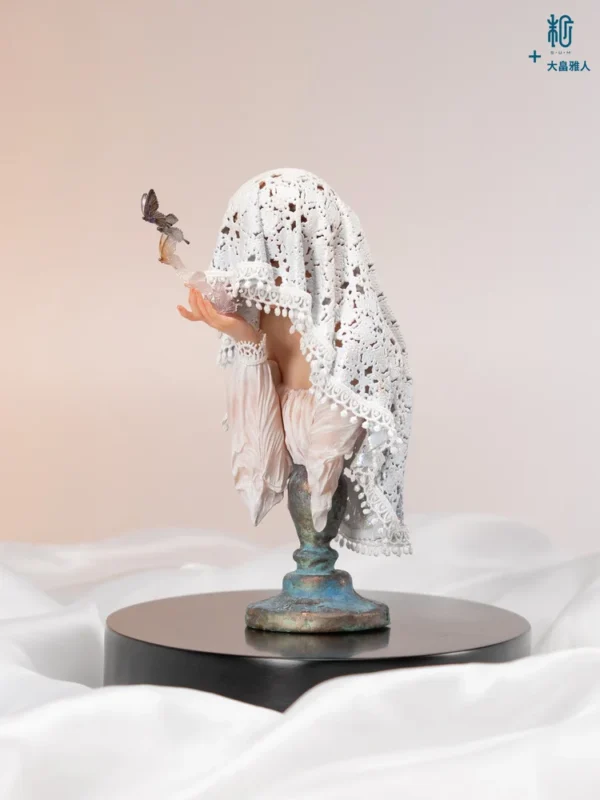
KOTODAMA Became One of Masato Ohata’s Favorite Works
The story behind the creation of KOTODAMA adds another layer of interest.
Masato Ohata describes the creation process as unusually smooth. From the initial concept through completion, the work developed almost seamlessly.
That creative experience ultimately made KOTODAMA one of Ohata’s favorite works.
For collectors, an artist’s personal relationship with a piece can make its story more compelling.
After all, collecting contemporary art is not always about owning the most technically complex object. Often, collectors are drawn to works that have a clear emotional or conceptual reason for existing.
In KOTODAMA’s case, the artist’s own appreciation for the finished work reinforces the importance of the concept.
It suggests that the piece was not merely an exercise in production. Instead, it represents an idea that resonated strongly with the artist throughout the creative process.
A Different Kind of Collectible for Modern Collectors
The collectible market continues to expand beyond conventional character figures.
Today, many collectors are interested in designer art, contemporary sculpture, original characters, cultural concepts, and artist-driven limited editions. Therefore, pieces such as the Manas KOTODAMA Statue can occupy an interesting position between traditional collectibles and contemporary art.
KOTODAMA does not require a collector to follow a specific fictional universe.
Instead, its appeal comes from the idea.
That makes it potentially suitable for:
- Contemporary art collectors
- Japanese art enthusiasts
- Limited-edition statue collectors
- Collectors interested in conceptual sculpture
- Fans of Masato Ohata’s artistic work
- Collectors looking for conversation-piece artworks
- Buyers who value cultural themes and artistic narratives
Furthermore, its compact production of 88 pieces per edition gives the work a clear place within a curated collection.
Production Timeline and Collector Planning
The estimated completion time for KOTODAMA is approximately five months after order confirmation.
Because this is a limited art collectible, buyers should consider the production timeline before ordering. Unlike an immediately available mass-produced figure, a limited artistic piece may require a longer waiting period between order confirmation and completion.
Therefore, collectors should plan their display space and purchasing schedule accordingly.
The five-month estimate also reflects the nature of the product as a specialized collectible. Rather than treating the statue as an ordinary retail item, collectors can approach the purchase as part of a longer-term acquisition strategy.
At the same time, the exact production timeline should be understood as an estimate rather than a guaranteed delivery date.
Why the KOTODAMA Concept Still Matters Today
The message behind the Masato Ohata KOTODAMA Statue feels particularly relevant in modern communication.
People can share information almost instantly. A sentence can travel from one person to thousands of people within moments. Consequently, the ability of words to influence others has become more visible than ever.
Positive words can spread encouragement.
Negative words can spread equally quickly.
The ancient concept of kotodama therefore provides an unexpectedly modern framework for thinking about communication.
KOTODAMA reminds us that language has consequences.
Moreover, the artwork does not simply tell viewers to avoid negative communication. Its message also encourages the creation and sharing of warmer words that can support others.
That balance between caution and hope gives the artwork a positive emotional direction.
Final Thoughts: More Than a Statue
The Masato Ohata KOTODAMA Statue is ultimately an artwork about something every person understands: the power of words.
Through the concept of kotodama, Masato Ohata explores the idea that language carries its own energy and influence. Words can travel, connect people, offer redemption, or cause harm. Therefore, communication becomes more than a simple exchange of information.
It becomes an act with consequences.
The collaboration with Manas transforms this concept into a licensed contemporary art collectible, while the S+U+M Edition and Artist Edition each remain limited to only 88 pieces. Furthermore, KOTODAMA became one of Masato Ohata’s favorite works after an unusually smooth creative process, giving the piece additional personal significance.
For collectors searching for something beyond conventional character statues, this is where KOTODAMA becomes especially interesting.
It offers a concept to think about, a story to discuss, and a limited artwork to display.
Ultimately, the Masato Ohata KOTODAMA Statue asks a simple but powerful question: if words have the power to influence people, what kind of words do we want to send into the world?
For collectors who value contemporary art with cultural meaning and a strong conceptual foundation, KOTODAMA is a distinctive addition to consider.