
 TopGK
TopGK Shop All

![The Legend of Zelda Link 1/6 Scale TOPGK Statue[R18] In Stock-MintBoy Studio - Photo 13 | TopGKStore](https://topgkstore.com/wp-content/uploads/2026/03/The-Legend-of-Zelda-Link-16-Scale-TOPGK-StatueR18-In-Stock-MintBoy-Studio-9-100x100.webp)
 By Source Type



Best-selling products
Alucard Statue: Dream Box Turns Hellsing’s No-Life King Into a Blood-Red Nightmare
Sep
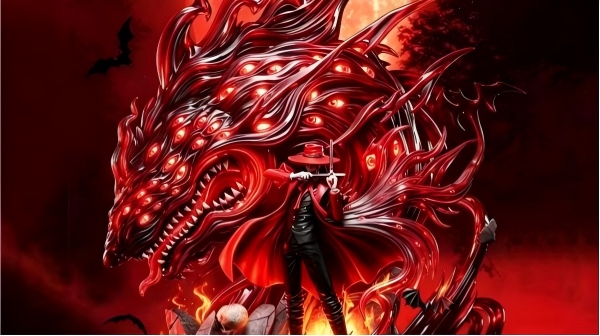
Dream Box – HELLSING Alucard 1/6 Scale TOPGK Limited Edition Resin Statue
Some vampire statues try to look elegant.
This one looks like the end of the world.
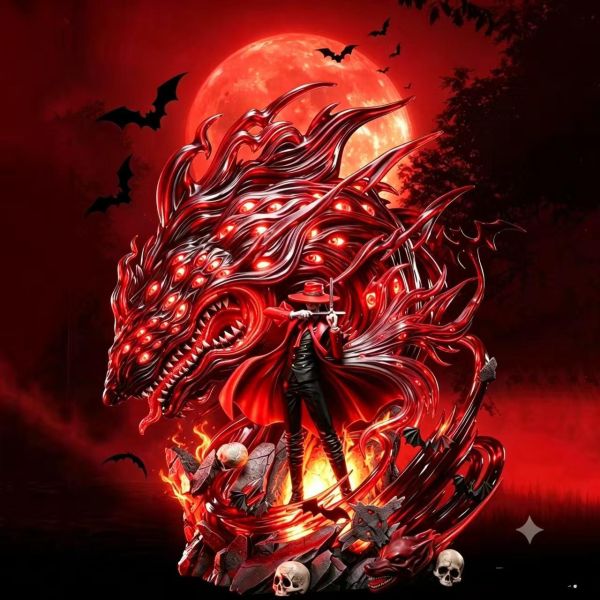
Dream Box Studio brings Alucard from Hellsing into a massive 1/6 scale resin scene built around everything that makes the No-Life King so terrifying: crossed pistols, a blood-red moon, swarms of bats, ruined architecture, skulls, and the enormous Baskerville looming behind him.
The result is less like a traditional character statue and more like a frozen moment from a supernatural battlefield.
With a limited production of only 39 pieces, this upgraded Dream Box Alucard is clearly designed for collectors who want their Hellsing display to feel dark, theatrical, and impossible to ignore.
Alucard Was Never Meant to Look Ordinary
Alucard does not need an introduction.
He is the vampire at the center of Hellsing, a character whose presence is built around absolute confidence, overwhelming power, and a disturbing sense of amusement. Even when he is standing still, there is always the feeling that something catastrophic could happen at any moment.
That makes him an unusually strong subject for a large resin statue.
A simple portrait would never be enough.
Dream Box instead surrounds Alucard with an entire visual environment.
The character stands at the center with his signature firearms raised in a crossed firing pose. His black Victorian-inspired suit, leather boots, wide-brimmed hat, and flowing crimson coat immediately create the unmistakable silhouette of the No-Life King.
Then you notice what is behind him.
Baskerville.
And suddenly, the statue becomes something much larger.
A Blood-Red Nightmare Built Around Alucard
The first thing that makes this piece stand out is scale.
The statue measures approximately 54 cm high, 60 cm wide, and 54 cm deep according to the current TopGK listing. That is already substantial for a 1/6 collectible. However, the visual impact comes from how much of that space is used to build the scene around Alucard.
The character is not isolated on a simple platform.
Instead, the composition expands outward.
A giant blood-red moon dominates the background. Black vampire bats cross the scene. Ruined architectural elements spread across the lower section, while skulls and battlefield debris fill the surrounding space.
At the center, Alucard remains calm.
That contrast is important.
The environment looks like chaos.
Alucard looks like he owns it.
This is one of the most effective ways to represent his character.
The Crossed Pistols Define the Pose
Alucard’s weapons are instantly recognizable.
Jackal and Casull are among the most iconic visual elements associated with him, and the Dream Box statue places them directly into the center of the composition.
His arms form a powerful crossed configuration as the two pistols point outward.
The pose is simple.
But it is not passive.
There is a cold confidence in the way Alucard holds himself. He does not appear desperate or overwhelmed by the battlefield surrounding him. Instead, everything around him feels like an extension of his power.
That distinction gives the statue its character.
The weapons are not simply accessories added to make the figure look more dynamic.
They establish Alucard’s attitude.
He is not running from the nightmare.
He is standing at its center.
Baskerville Turns the Statue Into Something Else
Then there is Baskerville.
The enormous blood-red hound rises behind Alucard, creating one of the most dramatic elements of the entire composition.
Its body twists upward behind the character, dramatically expanding the statue’s silhouette.
The creature’s enormous jaws open above Alucard, exposing rows of sharp teeth.
But the most disturbing detail is the eyes.
Multiple illuminated eyes appear across Baskerville’s body and head, creating an eerie supernatural effect. According to the product description, these details represent the countless souls consumed by Alucard.
That gives the creature more than a purely decorative function.
It becomes a visual representation of Alucard’s terrifying power.
The character is already dangerous.
Baskerville tells you just how dangerous.
And because the hound rises directly behind him, it also creates a powerful vertical silhouette that makes the statue feel significantly larger than a conventional 1/6 character piece.
The Blood Moon Sets the Mood
A good Hellsing collectible needs atmosphere.
The blood-red moon provides it immediately.
Placed behind Alucard and Baskerville, the moon creates a strong circular backdrop that separates the central figures from the darker surroundings.
At the same time, it reinforces the gothic horror identity of the series.
Black bats move across the moon.
Alucard’s crimson coat echoes the red background.
Baskerville introduces another layer of blood-red visual energy.
Meanwhile, the ruins and black costume keep the composition grounded in darker tones.
The result is a deliberate contrast between red, black, and shadow.
Nothing feels particularly bright or cheerful.
And that is exactly the point.
This is Hellsing.
The Upgraded Edition Goes Even Darker
Dream Box has positioned this release as an upgraded version, with comprehensive improvements to the effect painting. The product page specifically highlights stronger treatment across the visual effects, helping the red elements stand apart from Alucard’s dark clothing and the surrounding ruins.
That matters because this statue depends heavily on contrast.
Alucard himself is predominantly dark.
His suit, hat, boots, and overall styling naturally absorb visual attention without creating a huge amount of color variation.
The red elements therefore become essential.
The coat.
The moon.
Baskerville.
The illuminated eyes.
The surrounding effects.
Together, they create the visual rhythm of the piece.
The upgraded paintwork is intended to make those relationships more dramatic, especially under display lighting.
LED Lighting Changes the Display Completely
Lighting is not an afterthought here.
It is part of the atmosphere.
The Dream Box Alucard statue includes illuminated effects, including the glowing elements associated with Baskerville. The current TopGK page also lists LED as one of the product features.
That creates an important difference between daytime and nighttime display.
Under normal room lighting, the statue already has a strong silhouette.
Turn on the illuminated effects, however, and the atmosphere changes.
The eyes of Baskerville become more noticeable.
The red elements gain additional intensity.
The blood moon becomes more visually dominant.
Suddenly, the statue feels less like a static collectible and more like a scene taken from a dark fantasy environment.
For collectors who enjoy display pieces that change character depending on the lighting, this is a major part of the appeal.
Ruins, Skulls, and the Aftermath of Violence
The lower part of the composition deserves attention as well.
Rather than leaving the base empty, Dream Box fills it with ruined European-style architecture, broken structures, skulls, battlefield details, and additional visual elements.
These details help establish the setting.
More importantly, they make Alucard’s presence feel consequential.
A clean base would suggest that the character simply arrived at a location.
A destroyed environment suggests something already happened.
And with Alucard standing in the center, the viewer is naturally encouraged to imagine what came before.
That is an effective storytelling technique for a statue.
You are not only looking at the character.
You are looking at the aftermath.
Why the Scene Works for Alucard
There is a temptation when designing a vampire statue to focus entirely on elegance.
Alucard certainly has that side.
His Victorian clothing, long coat, hat, and distinctive silhouette all have a sophisticated quality.
But elegance is only half of his identity.
The other half is violence.
That is why this composition works better than a simple portrait.
The black suit gives him refinement.
The red coat gives him theatricality.
The pistols give him attitude.
Baskerville gives him monstrous scale.
The skulls and ruins give him consequence.
And the blood moon ties everything together.
Each element contributes something different.
Together, they create a version of Alucard that feels complete.
A Statue That Looks Like a Poster Come to Life
One of the most interesting qualities of this Dream Box release is its composition.
At first glance, the piece almost resembles a cinematic poster.
Alucard stands in the center.
The moon sits behind him.
Baskerville rises into the background.
The bats add movement.
The ruins create a lower visual foundation.
Then the red effects connect the different layers.
This creates depth without requiring the viewer to understand every individual detail.
You can appreciate the overall silhouette from across the room.
Move closer, and the smaller elements begin to emerge.
That is exactly what you want from a large scene statue.
It should work from a distance.
It should also reward closer inspection.
The 39-Piece Edition Makes the Concept Even More Focused
There is another important factor for serious collectors.
The current TopGK listing identifies this release as limited to only 39 units.
That is an extremely small production run.
For a character as recognizable as Alucard, the combination of a major Hellsing character and such a limited edition creates a very specific collector profile.
This is not the kind of statue intended to fill a mass-market display shelf.
It is much closer to a dedicated centerpiece.
The relatively low edition count also fits the nature of the piece.
A gigantic Alucard scene with Baskerville, a blood moon, LED effects, and ruined architecture already feels like a statement piece.
Knowing that only 39 units are planned makes the display feel even more exclusive.
Display Planning Matters More Than Usual
There is one thing collectors should think about before ordering.
Space.
This is not a small shelf figure.
The current TopGK listing gives the statue approximately 54 cm in height, 60 cm in width, and 54 cm in depth. That means the depth requirement alone is substantial.
And because Baskerville rises behind Alucard, the statue needs enough visual breathing room.
Do not squeeze it between two large pieces.
Give the silhouette space.
A darker background can also work particularly well.
Black or deep-toned shelving can allow the blood moon, crimson coat, and illuminated eyes to stand out more clearly.
If the statue is displayed inside a glass cabinet, make sure there is enough clearance around the upper section and enough depth for the full base.
This is a centerpiece.
Treat it like one.
Why Alucard Is Such a Strong Resin Statue Character
There is something particularly natural about Alucard as a resin collectible.
His design already contains the visual ingredients that make large-scale statues effective:
A distinctive silhouette.
A dramatic coat.
Signature weapons.
A monstrous companion.
Strong color contrast.
Gothic architecture.
And an unmistakable atmosphere.
In other words, Alucard does not need to be redesigned to work as a statue.
He simply needs enough physical space to let the original design breathe.
Dream Box uses that space aggressively.
The result is not minimal.
It is theatrical.
That is exactly what many Hellsing collectors are likely looking for.
For Collectors Who Want a True Hellsing Centerpiece
This statue makes the most sense for a particular type of collector.
If you simply want a small Alucard figure for a general anime shelf, there are plenty of more compact options.
But if Hellsing is one of the important franchises in your collection, the Dream Box version occupies a very different category.
It can serve as the visual anchor of an entire display.
Place Alucard at the center.
Add darker lighting.
Use smaller Hellsing pieces around the perimeter.
Then allow Baskerville and the blood moon to dominate the background.
The statue does much of the storytelling on its own.
That is the advantage of a large scene piece.
The No-Life King as a Display Statement
Alucard is not a character who should look restrained.
He is theatrical.
He is violent.
He is arrogant.
He is elegant.
And he is terrifying.
The Dream Box statue embraces all of those qualities at once.
The crossed pistols capture his confidence.
The crimson coat adds drama.
The blood moon establishes the gothic atmosphere.
Baskerville brings the monstrous side of his character to the forefront.
The ruins and skulls remind the viewer of the destruction surrounding him.
Finally, the lighting pulls everything together.
It becomes less about displaying a character and more about displaying the legend of Alucard.
Is the Dream Box Alucard Statue Worth Adding?
For Hellsing collectors who want a dramatic centerpiece, the Dream Box Alucard offers a very specific experience.
This is not a minimalist character statue.
It is not designed to disappear into a crowded shelf.
Instead, it demands attention.
The 1/6 scale gives Alucard substantial physical presence, while the large Baskerville, blood moon, ruined environment, and lighting effects expand the composition far beyond a conventional figure. The current TopGK listing also identifies it as an upgraded edition with only 39 planned units.
The main consideration is display space.
At roughly 54 × 60 × 54 cm, this is a serious piece of display furniture as much as it is a collectible.
But that is also its appeal.
It is designed to be seen.
Final Thoughts: When the Vampire Becomes the Battlefield
The best Alucard collectibles do not simply show what he looks like.
They show what it feels like when Alucard arrives.
Dream Box Studio takes that idea to an extreme.
Instead of placing the vampire king on a simple base, the studio builds an entire nightmare around him.
A blood-red moon hangs overhead.
Bats cross the sky.
Ruins and skulls surround the battlefield.
Baskerville towers behind him with countless glowing eyes.
And at the center, Alucard calmly raises Jackal and Casull.
The scene is violent, theatrical, gothic, and unmistakably Hellsing.
With only 39 pieces planned and an estimated Q4 2026 release, this upgraded Dream Box Alucard is aimed squarely at collectors looking for a limited, large-scale centerpiece rather than an ordinary character figure.
If Alucard is one of the characters you would give an entire display cabinet to, this is the kind of statue that can actually fill that role.
Would you display this Alucard statue as the centerpiece of a dedicated Hellsing collection, or let Baskerville dominate an entire gothic-themed display?