
 TopGK
TopGK Shop All


![The Legend of Zelda Link 1/6 Scale TOPGK Statue[R18] In Stock-MintBoy Studio - Photo 13 | TopGKStore](https://topgkstore.com/wp-content/uploads/2026/03/The-Legend-of-Zelda-Link-16-Scale-TOPGK-StatueR18-In-Stock-MintBoy-Studio-9-100x100.webp)
 By Source Type


Best-selling products
Ryomen Sukuna Statue: Floating Light Studio × MOCHI Studio Creates a Dark Japanese Garden
Sep
Floating Light Studio X MOCHI Studio – Jujutsu Kaisen Ryomen Sukuna TOPGK Resin Statue
Sukuna does not need a battlefield to look dangerous.
Sometimes, all he needs is a quiet garden, a confident expression, and the feeling that everyone around him is already under his control.
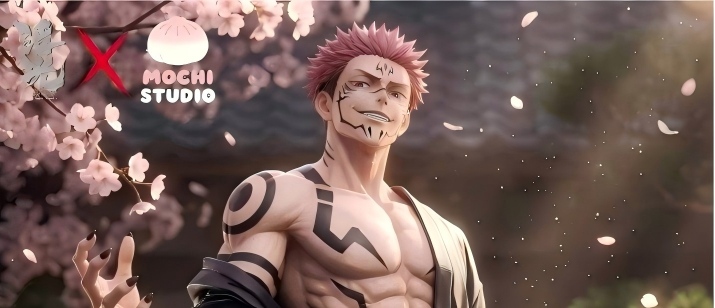
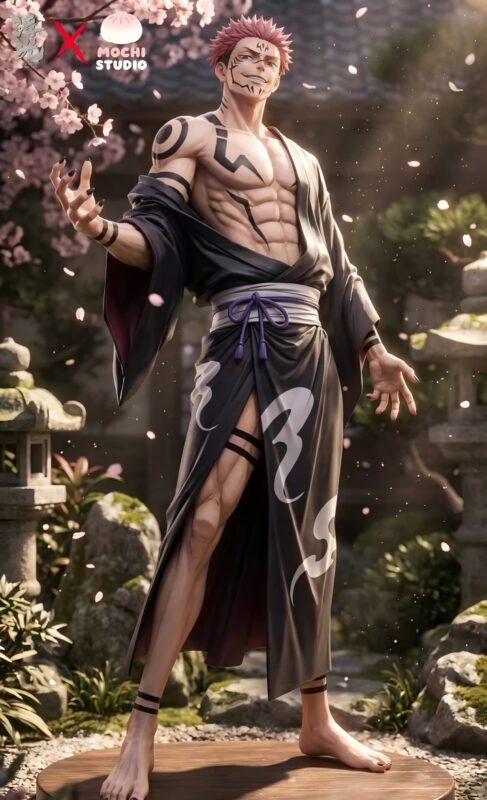
That is exactly what makes the Floating Light Studio × MOCHI Studio Ryomen Sukuna Statue so interesting. Instead of placing the King of Curses in another explosive combat scene, this collectible gives him a darker and more refined setting. Sukuna walks through a traditional Japanese garden surrounded by cherry blossoms, stone lanterns, moss-covered rocks, and an atmosphere that feels almost peaceful.
Almost.
Because standing at the center of the scene is Ryomen Sukuna.
With his pink spiked hair, black curse markings, narrowed eyes, and subtle grin, he still looks unmistakably like the King of Curses. Yet the kimono-inspired costume and calm walking pose create a different kind of intimidation.
This is Sukuna without the need to prove anything.
A Different Side of the King of Curses
Most Jujutsu Kaisen Sukuna statues naturally lean toward destruction.
The character is famous for overwhelming cursed energy, brutal battles, Malevolent Shrine imagery, and some of the most aggressive moments in the series. Those concepts work extremely well for large resin statues.
However, the Floating Light Studio × MOCHI Studio collaboration takes another approach.
Here, Sukuna is simply walking.
One foot moves forward while the oversized kimono spreads naturally around his body. His posture feels relaxed. His expression remains confident. Nothing about the pose suggests that he needs to hurry.
That restraint becomes part of the character design.
Rather than communicating power through a giant attack effect, the statue communicates it through body language. Sukuna looks like someone who already knows he is the strongest person in the room.
That makes the display feel more character-driven.
Sukuna’s Expression Does the Heavy Lifting
A good Sukuna statue needs more than recognizable tattoos and pink hair.
His expression has to carry the personality.
This piece uses narrowed eyes and a subtle grin to create a controlled, almost arrogant appearance. The expression avoids excessive exaggeration, yet it still gives Sukuna the dangerous confidence associated with his character.
The black curse markings are equally important.
They extend across his face and arms, immediately separating him from an ordinary character design. Against the lighter tones of the surrounding garden, those markings become even more noticeable.
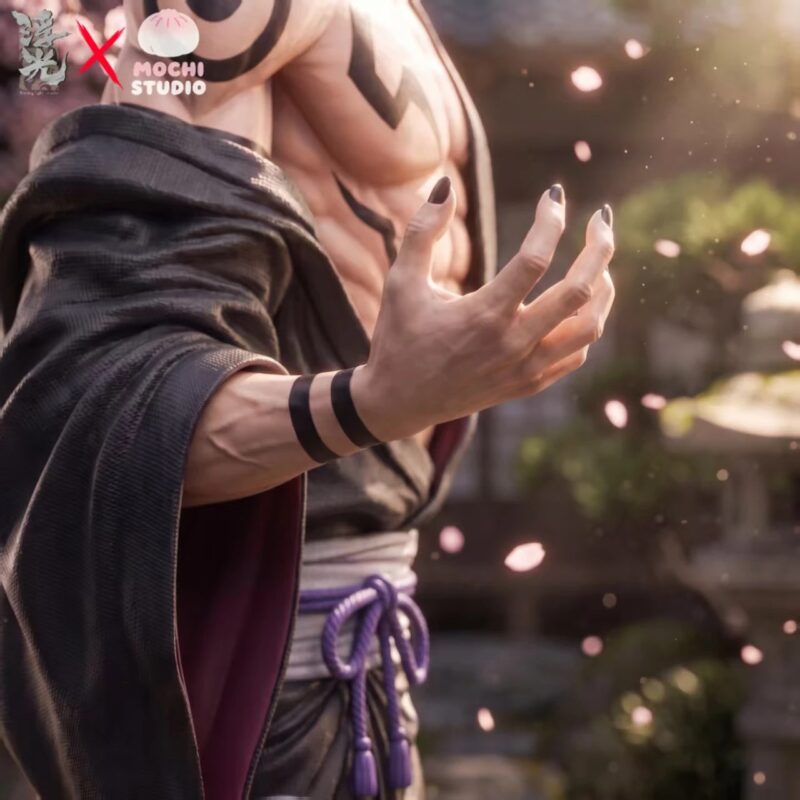
Meanwhile, the detailed hands and dark nails reinforce the supernatural identity of the character.
The result is a face that can hold attention even without an enormous action effect surrounding it.
For collectors, that matters.
A statue with a strong facial sculpt can remain visually interesting from the front, three-quarter angles, and even closer display distances. This Sukuna design is built around exactly that kind of presence.
The Kimono Creates a Strong Silhouette
One of the most distinctive elements of this statue is Sukuna’s oversized kimono-inspired costume.
The dark garment creates a broad silhouette around his body. At the same time, the exposed upper-body sculpt keeps the character’s physical strength visible.
That contrast works particularly well.
The kimono feels traditional and ceremonial, while Sukuna himself remains threatening and physically imposing.
White cloud patterns decorate the dark fabric. A pale purple obi adds another layer of color, while hanging cords introduce additional Japanese-inspired details.
These elements also prevent the costume from becoming visually flat.
From a distance, the viewer first notices the large dark silhouette. As you look closer, however, smaller details begin to emerge.
That layered approach is valuable for resin collectors.
A statue can look impressive in a product photograph, but it becomes much more rewarding when the sculpt continues to reveal details after it enters a display cabinet.
A Walking Pose Instead of a Battle Pose
The relaxed walking pose might be the most important creative decision in the entire composition.
Sukuna is not attacking.
He is not preparing a technique.
He is not surrounded by an explosion of cursed energy.
He is simply moving forward.
The pose therefore depends heavily on weight distribution and fabric movement. One leg leads the composition, while the kimono follows the movement of the body.
This gives the statue a natural sense of motion.
At the same time, the pose remains controlled. It does not feel like an action figure frozen in the middle of an attack.
Instead, it feels like a character caught during a moment of quiet confidence.
That distinction can make a big difference on a collector’s shelf.
A highly dynamic battle statue can dominate an entire display immediately. This Sukuna statue takes a more atmospheric route. It creates a scene that invites the viewer to look at the character, then explore the environment around him.
Cherry Blossoms Meet the King of Curses
The base changes everything.
Rather than using a destroyed city, ruined shrine, or battlefield, Floating Light Studio × MOCHI Studio places Sukuna inside a traditional Japanese garden.
Pink and white cherry blossoms surround the character.
Stone lanterns sit among moss-covered rocks.
The environment feels old, quiet, and carefully maintained.
Then Sukuna enters the scene.
That contrast creates the visual identity of the statue.
Cherry blossoms traditionally evoke beauty, seasonal change, and fleeting moments. Sukuna represents something much darker. He is associated with curses, violence, fear, and overwhelming power.
Putting these ideas together produces a scene that feels beautiful without becoming gentle.
The garden is peaceful.
Sukuna is not.
That tension gives the statue much more personality than a simple character sculpt on a generic base.
Why the Japanese Garden Matters
The environment is not just decoration.
It establishes the emotional tone of the entire piece.
Imagine displaying this statue beneath warm cabinet lighting. The cherry blossoms become the first color that catches the eye. The stone lanterns and moss create a sense of depth. Then the dark kimono and curse markings pull attention back toward Sukuna.
The scene gradually moves from soft colors toward darker visual elements.
That creates a natural hierarchy.
First, the viewer sees the garden.
Then the character.
Finally, the smaller sculpted details.
This type of composition can work especially well for collectors who prefer diorama-style statues rather than simple character portraits.
The environment gives the piece its own visual world.
Floating Light Studio × MOCHI Studio Collaboration
The statue is presented as a collaboration between Floating Light Studio and MOCHI Studio, combining their names on a character-focused Jujutsu Kaisen collectible. The product page identifies it as Handsome Series 003 – Sukuna Sama and lists it as a GK statue currently available for pre-order.
The collaboration also gives the piece a slightly different identity from many conventional Jujutsu Kaisen resin releases.
Rather than building everything around the most recognizable battle imagery, the design explores Sukuna through fashion, atmosphere, and traditional Japanese visual elements.
That makes the statue feel closer to a character art interpretation.
It is still clearly Sukuna.
However, it presents him through a different lens.
A Display Piece Built Around Contrast
The strongest reason to consider this statue is the contrast running through almost every part of the design.
Sukuna versus the garden.
Dark kimono versus pink cherry blossoms.
Traditional aesthetics versus supernatural markings.
Relaxed posture versus dangerous personality.
Beautiful scenery versus the King of Curses.
None of these elements needs to overpower the others.
Instead, they work together.
This is particularly useful when planning a Jujutsu Kaisen collection. If your shelf already contains several statues featuring cursed energy explosions and aggressive battle poses, a quieter Sukuna interpretation can introduce visual variety.
It can also work as a standalone display.
You do not need an entire diorama collection around it for the concept to make sense.
The garden already provides the context.
The Importance of the Unspecified Scale
Collectors should pay attention to one practical detail before ordering.
The current TopGK listing categorizes the statue as Other Scale, while the height and exact dimensions are not currently specified. The estimated release is listed as Q2 2027. As with many resin collectibles still in the pre-order stage, production information may change before final release.
This makes display planning slightly different from a conventional 1/6 or 1/4 statue.
If your cabinet has strict height or depth limitations, it is worth confirming the final production dimensions before shipment.
That said, the composition itself suggests that this is intended to function as a complete scene rather than simply a character bust.
The garden elements are part of the experience.
Who Is This Sukuna Statue For?
This release should appeal to collectors who want something different from the usual Sukuna presentation.
It makes particular sense for fans who enjoy:
- Jujutsu Kaisen resin and GK statues
- Ryomen Sukuna character collectibles
- Traditional Japanese-inspired character designs
- Cherry blossom dioramas
- Atmospheric display pieces
- Kimono-inspired anime statue designs
- Character-focused resin sculptures
- Japanese garden aesthetics
- Alternative interpretations of familiar characters
It may also appeal to collectors who appreciate statues that look calm at first glance but reveal darker details the longer you examine them.
That is arguably the biggest strength of the concept.
The statue does not need to shout.
It lets the character do the work.
A Refined Alternative to Battle-Heavy Sukuna Statues
Sukuna has already been represented in countless aggressive compositions.
Four arms.
Cursed techniques.
Destroyed environments.
Massive effects.
Malevolent Shrine.
All of these are instantly recognizable.
Yet there is something refreshing about seeing him simply walk through a garden.
The absence of a huge attack effect does not make him feel weaker.
Instead, it makes his confidence more noticeable.
He looks like a character who does not need an attack pose to establish dominance.
That interpretation is particularly fitting for Sukuna.
Final Thoughts
The Floating Light Studio × MOCHI Studio Ryomen Sukuna Statue is built around an unusual idea: take one of Jujutsu Kaisen’s most terrifying characters and place him somewhere beautiful.
The result is not peaceful.
It is elegant, threatening, and slightly unsettling.
Sukuna’s confident expression, dark curse markings, oversized kimono, flowing silhouette, and relaxed walking pose establish the character. Meanwhile, cherry blossoms, stone lanterns, moss-covered rocks, and the traditional Japanese garden transform the statue into a complete scene.
For collectors who want another explosive Sukuna battle statue, this design takes a different path.
For collectors who want a more atmospheric interpretation of the King of Curses, however, that difference is exactly what makes it memorable.
Would you display Sukuna in a traditional Japanese garden like this, or do you prefer the more destructive battle-focused versions of the character?
If this darker and more refined interpretation fits your Jujutsu Kaisen collection, you can explore the Floating Light Studio × MOCHI Studio Sukuna statue through the TopGK product page.