
 TopGK
TopGK Shop All



![The Legend of Zelda Link 1/6 Scale TOPGK Statue[R18] In Stock-MintBoy Studio - Photo 13 | TopGKStore](https://topgkstore.com/wp-content/uploads/2026/03/The-Legend-of-Zelda-Link-16-Scale-TOPGK-StatueR18-In-Stock-MintBoy-Studio-9-100x100.webp)
 By Source Type


Getting Started Guide
Anime Figure Scale Guide: Understanding 1/8, 1/7, 1/6 and How to Choose the Right SizeAnime Figure Scale Guide
Nov
Anime Figure Scale Guide: Understanding 1/8, 1/7, 1/6 and How to Choose the Right Size
Introduction
When buying an anime figure for the first time, many beginners focus only on character popularity or price. However, one of the most important — and often misunderstood — factors is figure scale.
Scale determines how large the figure is, how much detail it can hold, how much space it requires, and ultimately, how satisfied you’ll be after the purchase.
As an official anime figure distribution brand, TopGK often sees beginners regret their first purchase simply because they underestimated or misunderstood scale. This guide is written to help you avoid that mistake.
By the end of this article, you’ll understand:
- What anime figure scale really means
- The differences between 1/8, 1/7, 1/6, and other common scales
- Which scale is best for beginners
- How to choose scale based on space, budget, and display goals
What Does “Scale” Mean in Anime Figures?
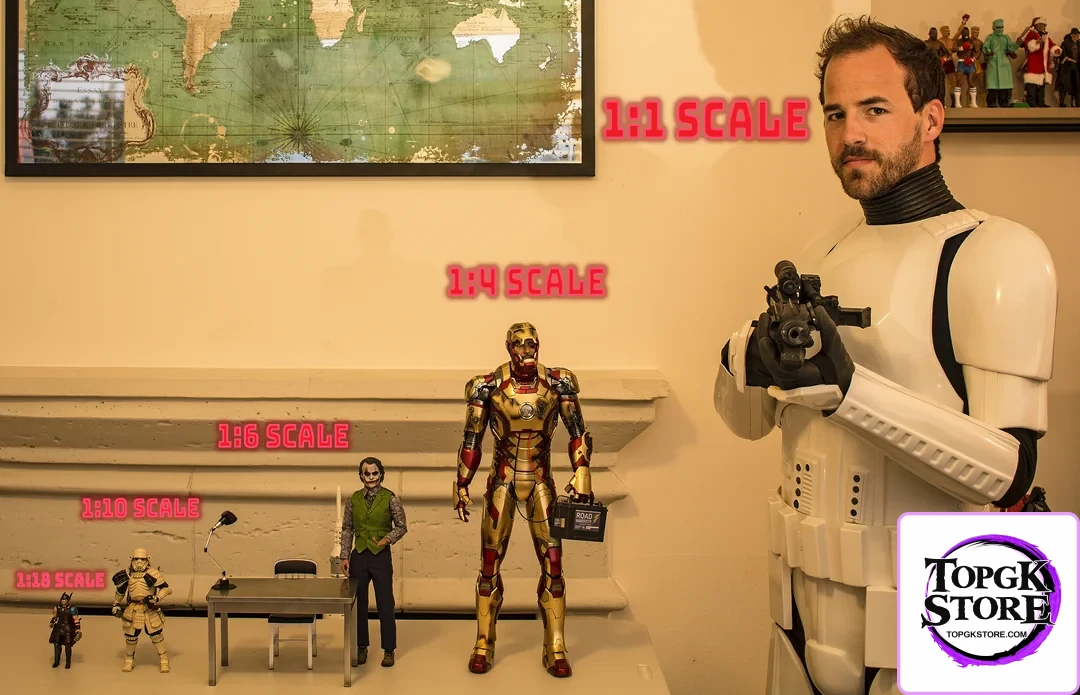
In simple terms, scale refers to the ratio between the figure and the character’s real-life height.
For example:
- A 1/8 scale figure means the figure is one-eighth the size of the character.
- A 1/7 scale figure is larger and more detailed.
- A 1/6 scale figure is even larger and closer to premium collectible size.
If a character is 160 cm tall:
- 1/8 scale ≈ 20 cm tall
- 1/7 scale ≈ 23 cm tall
- 1/6 scale ≈ 26–28 cm tall
Scale directly affects:
- Physical size
- Visual presence
- Level of sculpt detail
- Price
- Display requirements
Why Scale Matters More Than Beginners Expect
Many first-time buyers assume that scale is just about size. In reality, scale influences the entire ownership experience.
Scale affects detail quality
Larger scales allow manufacturers to:
- Sculpt finer facial expressions
- Add layered paint shading
- Include complex clothing textures and accessories
Smaller scales often simplify details to keep costs reasonable.
Scale affects display space
A figure may look small in photos but take up significant space once placed on a shelf, especially with dynamic poses or wide bases.
Scale affects long-term collecting
Most collectors naturally gravitate toward one or two preferred scales. Buying random scales early can lead to an unbalanced collection later.
Overview of Common Anime Figure Scales
Let’s break down the most common scales you’ll encounter.
1/8 Scale Figures: Compact and Beginner-Friendly
Key Characteristics
- Height: ~18–21 cm
- Price range: Lower to mid-range
- Display: Easy to place on desks or shelves
Pros
- Affordable entry point
- Requires minimal display space
- Suitable for casual collectors
Cons
- Less detailed compared to larger scales
- Visual impact may feel limited for centerpiece displays
Who Should Choose 1/8 Scale?
- Absolute beginners
- Buyers with limited space
- Fans who want multiple characters without high cost
At TopGK, we often recommend 1/8 scale for collectors who want to “test the waters” before committing to premium figures.
1/7 Scale Figures: The Industry Sweet Spot
Key Characteristics
- Height: ~22–25 cm
- Price range: Mid-range
- Display: Balanced presence and size
Why 1/7 Is So Popular
1/7 scale is widely considered the best balance between size, detail, and price. This is why many top manufacturers prioritize this scale.
Pros
- Excellent sculpt and paint detail
- Strong shelf presence
- Wide selection of characters
Cons
- Requires more shelf depth than 1/8
- Slightly higher cost
Best For
- First serious figure purchase
- Collectors who want quality without extreme cost
- Long-term collection building
If you’re unsure which scale to choose, 1/7 is usually the safest recommendation.
1/6 Scale Figures: Premium and Display-Focused
Key Characteristics
- Height: ~26–30 cm
- Price range: High
- Display: Requires dedicated space
Pros
- Exceptional detail
- Strong visual impact
- Ideal as centerpiece figures
Cons
- Expensive
- Heavy and space-consuming
- Limited display flexibility
Who Should Choose 1/6 Scale?
- Experienced collectors
- Buyers with dedicated display cabinets
- Fans who want a single “statement” figure
From a channel perspective, TopGK usually recommends 1/6 scale only after collectors understand their space and budget limits.
Other Common Scales You May Encounter
1/10 or 1/12 Scale
- Smaller, often used for articulated figures
- Easier to pose
- Less emphasis on static sculpt detail
Non-Scale Figures
- No fixed ratio
- Often prize figures or stylized designs
- Focus on affordability rather than precision
For beginners seeking consistent quality and value, scale figures are generally preferable to non-scale figures.
Choosing the Right Scale Based on Your Space
Before buying, always consider where the figure will be displayed.
Desk Display
- Recommended: 1/8 or smaller
- Avoid wide bases or dynamic poses
Shelf Display
- Recommended: 1/7
- Check shelf depth and height
Display Cabinet
- Recommended: 1/7 or 1/6
- Allows better lighting and spacing
A common beginner mistake is buying a beautiful figure without measuring available space.
Choosing Scale Based on Budget
Scale and price are closely linked.
| Scale | Typical Price Level |
|---|---|
| 1/8 | Entry to mid |
| 1/7 | Mid to upper-mid |
| 1/6 | Premium |
Remember:
A higher scale doesn’t always mean better value if it stretches your budget or limits future purchases.
Visual Consistency in Your Collection
One overlooked factor is collection harmony.
Mixing different scales on the same shelf can:
- Break visual balance
- Make larger figures overshadow smaller ones
Many collectors eventually reorganize their collections by scale.
Choosing a main scale early helps maintain consistency as your collection grows.
Manufacturer Preferences by Scale
Different manufacturers specialize in different scales.
- Many Japanese manufacturers focus on 1/7
- Premium studios often prefer 1/6
- Entry-level lines may prioritize 1/8
As an official channel, TopGK lists scale clearly on every product page, ensuring buyers know exactly what they are getting.
Common Beginner Mistakes Related to Scale
Mistake 1: Choosing scale based only on photos
Product photos can be misleading without size references.
Mistake 2: Ignoring base size
Dynamic poses often require larger bases than expected.
Mistake 3: Mixing scales randomly
This often leads to dissatisfaction and re-buying later.
How TopGK Helps Beginners Choose the Right Scale
As a professional distribution brand, TopGK focuses on transparency and guidance, not just sales.
We provide:
- Clear scale specifications
- Real-world display references
- Beginner-focused recommendations
Our goal is to help collectors build a collection they’ll still love years later, not just make a one-time purchase.
Final Recommendation: Which Scale Should Beginners Choose?
If you want a simple answer:
- Limited space & budget → 1/8 scale
- Best overall experience → 1/7 scale
- Premium display focus → 1/6 scale
For most beginners, 1/7 scale offers the best balance and remains the most popular choice worldwide.
Conclusion
Understanding scale is a foundational step in anime figure collecting. It affects not only how your figure looks, but how it fits into your life, space, and future collection.
By choosing the right scale from the beginning, you:
- Avoid unnecessary regret
- Save money long-term
- Build a cleaner, more satisfying collection
As you continue your journey, guides like this — along with official channels such as TopGK — exist to help you make informed, confident decisions.
Ready to start your collection? Check out our latest Lync Studio GK statues or explore more anime figures in our store.
Other recommended articles about manga and anime figures/collectibles:Click here!