
 TopGK
 Shop All



 By Source Type


Buying Guide
Hatsune Miku EXPO Rosuuri Ver. Reissue: A 1/7 Figure Returns
Oct
Reissues are unusual in figure collecting.
Most releases run once, and collectors who miss the window either pay a premium later or move on.
Every so often a manufacturer brings a popular design back, usually because demand never faded.
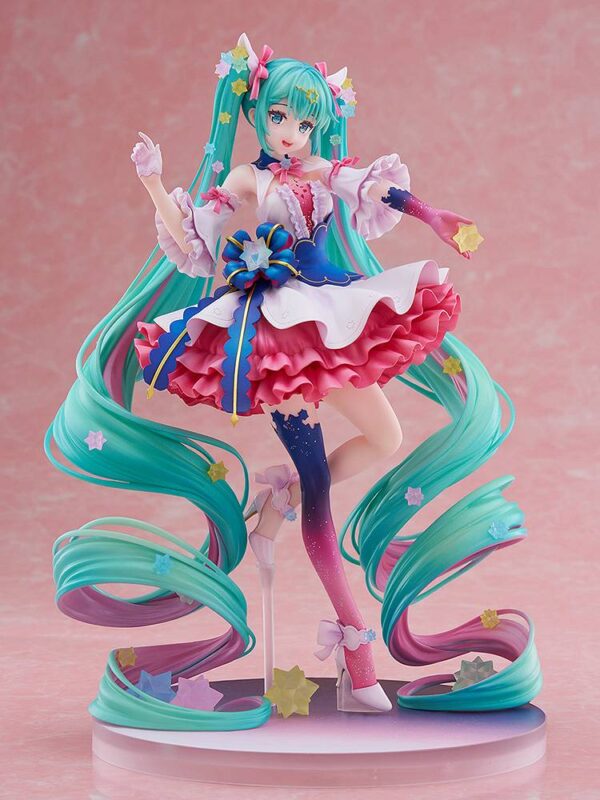
The Hatsune Miku EXPO Figure in the Rosuuri Ver. returns in exactly that situation, as a 1/7 reissue from Good Smile Company and DMM Factory.
It sits in the Creator’s Collection line.
Why Reissues Matter
A reissue resets the market for a design.
Prices on the original run usually fall back toward retail once new stock appears, which helps buyers who missed the first window.
It also means the piece becomes available to collectors who were not in the hobby when it first released. That is a large group in the Miku market, where the audience keeps renewing.
The trade-off is subtle. A reissue rarely matches the original exactly, and collectors who care about first prints keep track of the differences.
The Creator’s Collection
Good Smile runs several lines, and each one signals something about the design.
The Creator’s Collection brings illustrators into the process, so the figure reflects an artist’s interpretation rather than a neutral character model.
That matters for Miku in particular. She has no fixed canonical design, which is why so many different versions of her exist and why the line has lasted.
Collectors who follow specific illustrators tend to track these releases more closely than the standard ones.
One Seventh Scale
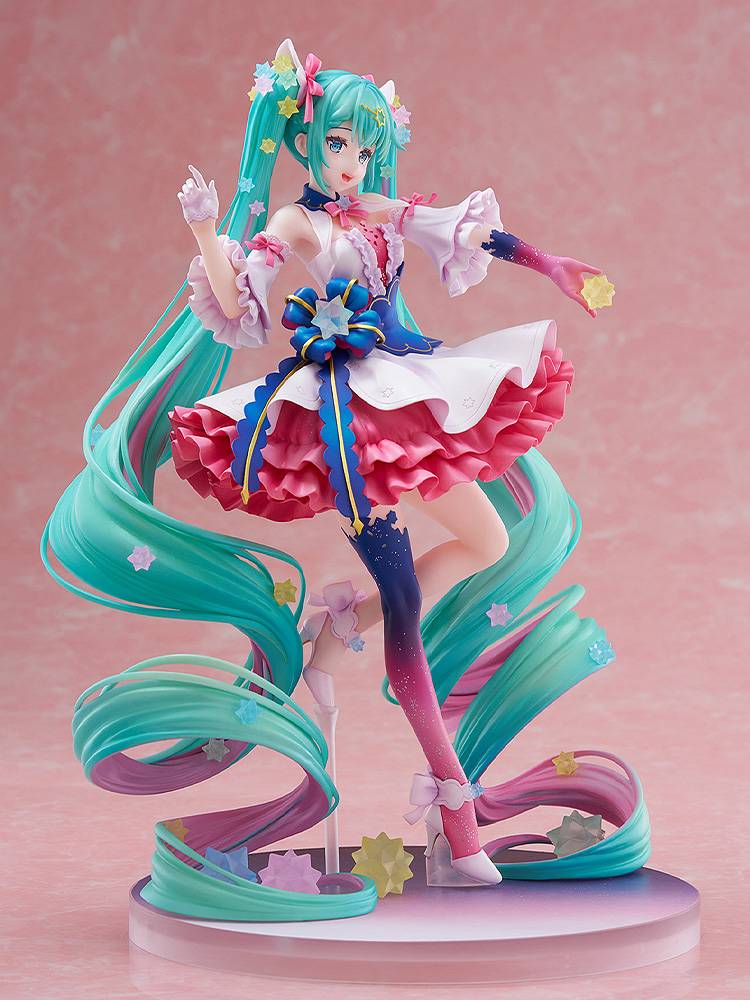
The figure records 1/7 scale, which remains the standard bracket for retail releases.
At that size the piece fits a cabinet shelf without forcing a rearrangement, and it lines up beside other 1/7 figures consistently.
It also keeps the shipping cost low, which matters on a retail figure.
The listing leaves the height range open, so check the product page if you need exact dimensions.
Reading the Sculpt
Three details decide whether a Miku figure works.
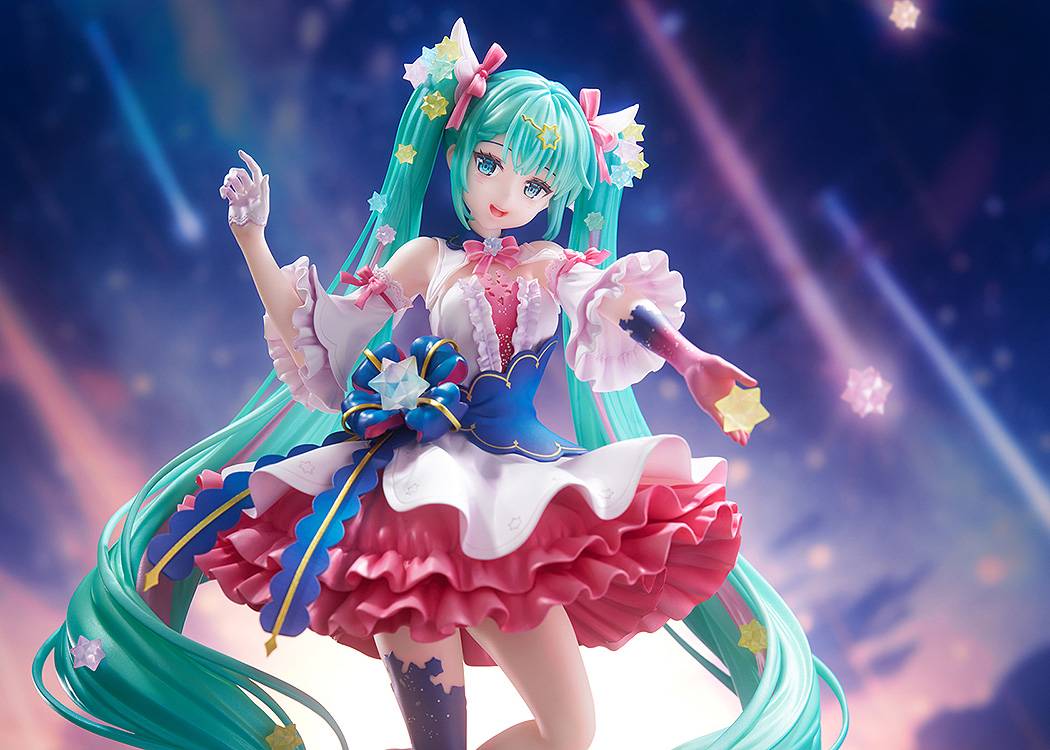
The face comes first. Illustrator-driven designs carry specific expressions, and a sculptor who generalises them loses the artist’s intent.
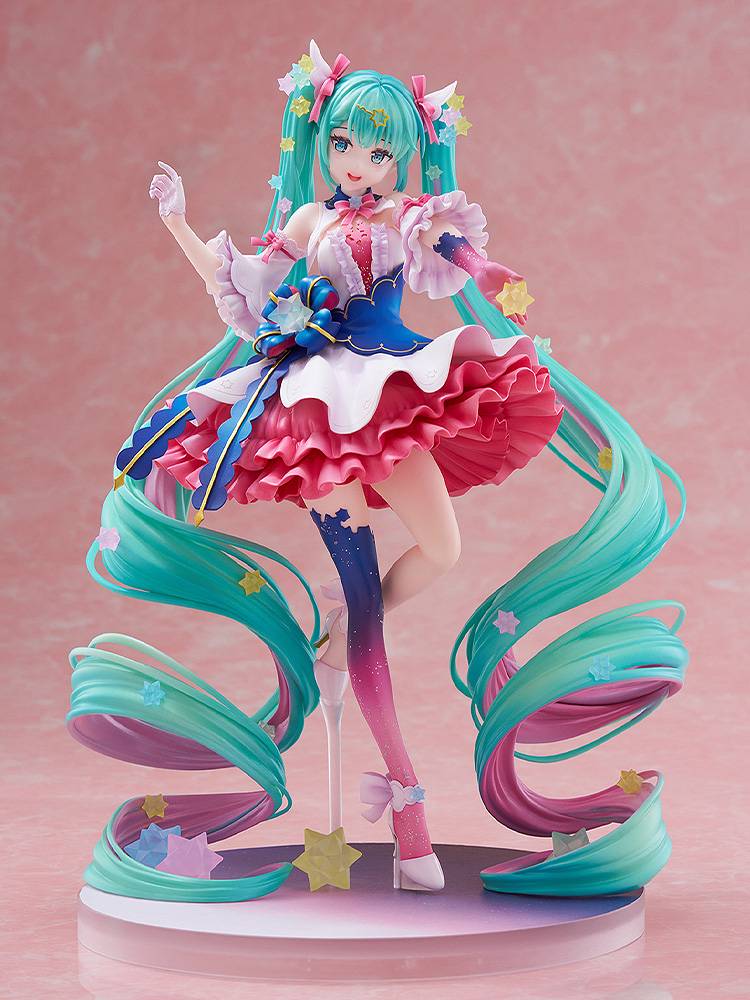
The hair comes second. Twin tails need clear volume separation, since they occupy most of the silhouette.
The pose comes third, and it decides whether the figure reads as a character or as a display stand.
Compare the gallery against all three before committing.
Price, Deposit and Payment
Pre-orders run from a $69 deposit against a $229 full payment.
That sits in the standard bracket for a 1/7 retail release, which is one reason reissues sell well.
The deposit option reserves a unit now and settles the balance later.
Freight stays low on a retail figure, and the box fits standard shipping limits.
Display and Lighting
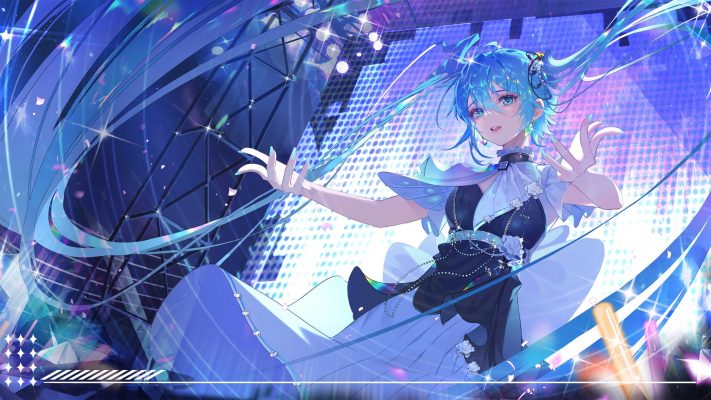
The palette runs cool, with the character’s signature tones against lighter fabric.
Warm light shifts the colour balance and flattens the contrast. Cold light drains the skin tones instead.
A neutral source from above and slightly in front keeps the figure accurate.
Place it at or slightly below eye level, and keep it out of direct sun.
Care and Storage
Dust with a soft brush rather than a cloth, since wiping catches on thin hair elements.
Where the surface needs more, use lukewarm water with a drop of mild soap and dry it completely.
Keep the original packaging. Reissues and first prints are distinguished partly by their boxes.
Where It Fits in a Miku Shelf
Miku collections tend to be large and varied, because the character has no single canonical design.
That makes shelf planning easier than it sounds. A new Miku figure rarely duplicates an existing one, since each release reflects a different artist or theme.
Collectors who group by illustrator will find this sits with the rest of the Creator’s Collection pieces, and the reissue gives latecomers a way in.
The Miku Market and Reissue Culture
Miku merchandise behaves unlike anything else in the hobby.
She has no single canonical design, so every release reflects a different illustrator, theme or collaboration. That keeps the catalogue varied and the audience engaged across years.
It also makes reissues viable. A design that sold well once can sell again, because the audience keeps renewing and the character never leaves circulation.
For collectors, that has two effects. Missed releases sometimes return, which lowers the pressure on any single pre-order. And prices on the original run usually settle once new stock appears.
It does not make every piece easy to find. Collaborations tied to an event often stay limited, while standard releases come back.
Learning which category a release belongs to is part of collecting the character, and it decides whether waiting is reasonable or risky.
Who This Figure Is For
Miku collectors who missed the original release will find this resets the price to something reasonable.
It also suits anyone who follows particular illustrators rather than the character alone.
And for collectors who already own other Creator’s Collection figures, the scale and the packaging keep the set consistent.
The Hatsune Miku EXPO Figure suits a shelf built around Miku releases.
Bring Miku Home
If this belongs in your collection, you can review the full details and reserve one on the product page.
See the Hatsune Miku EXPO Rosuuri Ver. Figure on TopGK
Would you add this Miku figure to an existing shelf, or keep it as the start of a Creator’s Collection group?